Impressions from JO Fintech Festival 2026.
From the Dead Sea, the regulator made the direction clear
A few days ago, our team was at JO Fintech Festival 2026 at the Dead Sea. The festival's theme was "Where Regulation Meets Innovation."
In the opening, the Governor of the Central Bank of Jordan, Dr. Adel Al-Sharkas, summed up the whole idea in one sentence:
"Innovation does not need less oversight, it needs smarter oversight." [1]
In his speech, he placed open financial services next to digital financial identity and RegTech as core tools the Central Bank is using to build Jordan's fintech ecosystem. He also noted that 12 products from 12 companies have been tested in the Central Bank's regulatory sandbox (JoRegBox), including Open Finance solutions [2][3].
When the regulator puts Open Banking on the table at the opening of the festival, that is not a small detail. It is a clear message: the direction is set.
Open Banking was in almost every conversation
Open Banking was not limited to one session. It came up in most of the discussions: on stage, in the hallways, and in one-to-one meetings between financial institutions, fintechs, and solution providers.
Digitinary (Our CEO Salah Abu-Msameh) also joined a panel on exactly this topic: "APIs, Data & Trust: The Three Pillars of Open Banking Success" [4]. Around the table were a bank, a fintech, a technology solution provider, and Digitinary.
Four different angles... on the same question.
Why it is the foundation, not "one option among many"
Let's skip the textbook definitions and look at the reality on the ground.
Today, any fintech that wants to build a service based on a customer's banking data, or on payments, has almost one path: go to one specific financial institution, negotiate, sign an agreement, and build a custom integration just for them.
Need a second institution? The same journey starts again from zero.
That is not an ecosystem. It is a set of side doors, and every door needs a different key.
Open Banking flips the equation. Instead of a side door into one institution, the whole sector opens up, in an organized and regulated way. That is why it is the foundation, not just another tool:
| Pillar | What it means in practice |
|---|---|
| One standard | The same APIs, the same data format, and the same customer consent flow across every data provider. Build once, reach everyone. As we have said before, having APIs alone does not mean an institution is doing Open Banking. The difference is the standard and the consent [8]. |
| A regulated path | Licensed fintechs know their rights and duties, and financial institutions know who they are opening up to, and for what. No grey areas. |
| Security by design | Instead of every institution setting its own rules, one framework defines authentication, encryption, and data protection. |
| Clear compliance | No misunderstandings, no guesswork, and no hidden compliance risks that only show up after a service goes live. |
The most important result is financial inclusion. The opportunity is no longer limited to fintechs with the right relationships, or the size to negotiate. Any fintech that proves it is a real fintech can reach the same infrastructure, on the same terms.
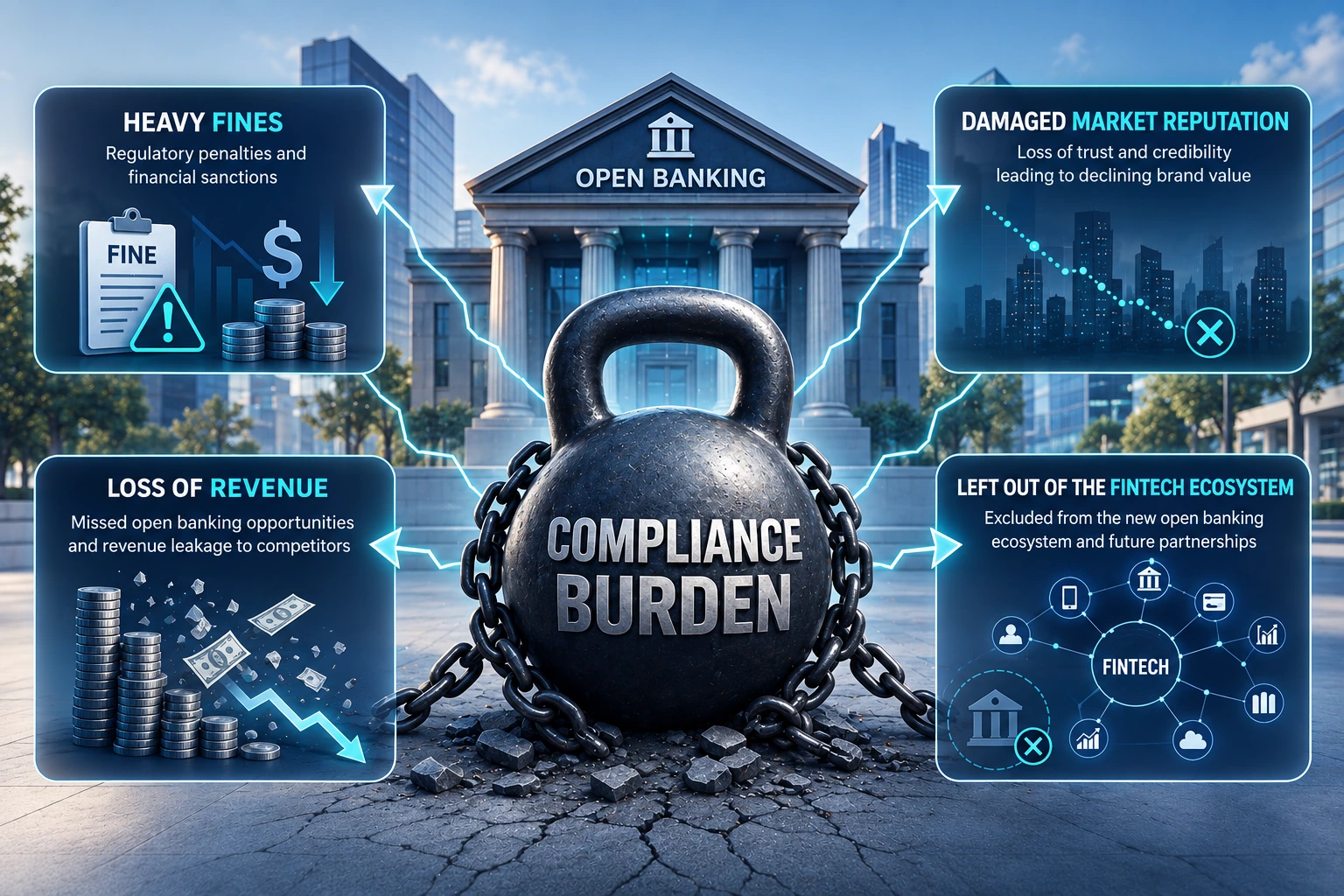
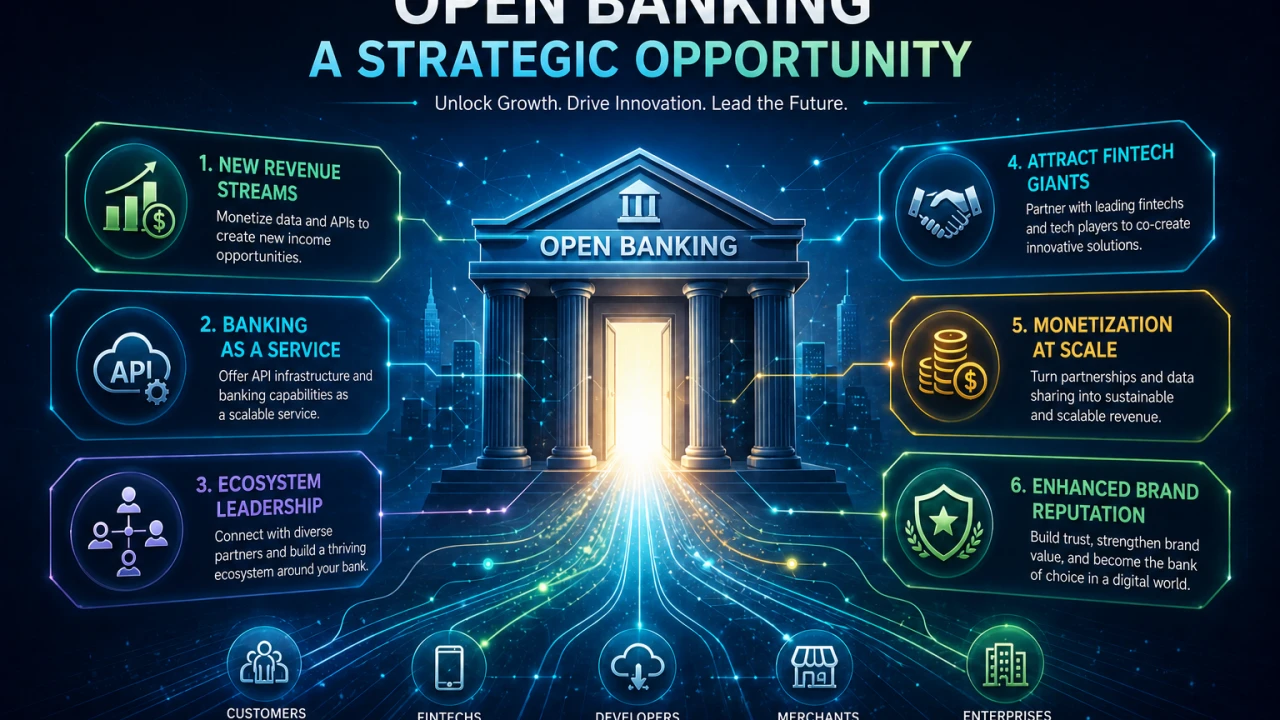
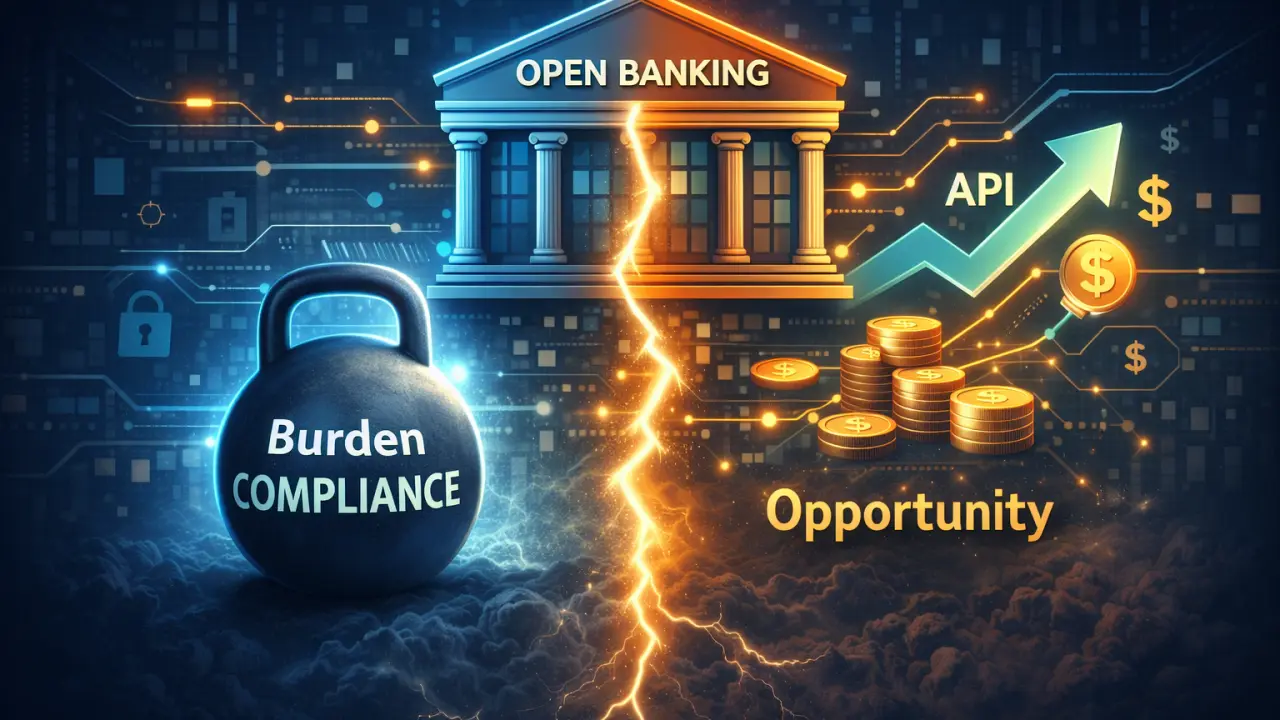
And this is not only a win for fintechs. We have written before that the financial institutions that see Open Banking as an opportunity, not a compliance burden, are the ones that will capture the most value from it (Beyond Compliance: Open Banking as a Real Strategic Opportunity) [7].
Note
Without this foundation, fintechs stay experiments. They may succeed... but they stay limited.
The ideas that never got the chance to launch
Digitinary is licensed by the Central Bank of Jordan to build Open Banking infrastructure. A core part of our work is talking with fintechs, and with companies that could become fintechs.
In one of these meetings, we sat with a group of small, early-stage companies. What stood out was how creative their ideas were. Not copied ideas, but ideas that touch a real pain in our society and solve a real problem.
But the story we heard kept repeating itself: months, and for some of them years, trying to get access to the customer data that should reach them through Open Banking. Or to payment services. Or to verification services.
The answer was always the same: it isn't available. Not only because financial institutions refused the idea, but because there was no clear regulation, no published technical framework, and no mandate from the Central Bank requiring data providers to build this infrastructure.
The result was painful.
Important
Some of these companies closed their doors, and some founders gave up on their ideas. They could not even run a PoC or launch a simple pilot to test the market. Not because the idea was weak, but because there was no ground to build on.
We wrote about part of this cost in our article on slow partner onboarding: the partnership that never happens is a loss nobody notices, but the whole market pays for it (The Silent Cost of Slow Partner Onboarding) [9].
Fintechs don't always fail because the idea is wrong. Sometimes they fail because the foundation isn't there.
Where does Jordan stand today?
Jordan was one of the first countries in the region to issue Open Banking instructions, back in 2023.
Today, the Central Bank has issued a draft of the updated instructions, which is now in the feedback stage with the sector, including banks and e-wallets. In parallel, work is ongoing on the technical framework, and Digitinary is part of the effort helping to build it. Once the feedback cycle is complete, the framework is expected to be issued soon.
Most importantly, there will be a mandate from the Central Bank requiring data providers to implement it. What is not yet known is how long institutions will be given to comply.
If we could tell the regulator one thing
During the panel, we were asked a direct question: if the regulator were sitting in front of you, what is the most important thing you would tell them?
Our answer built on something we wrote a few months ago, after attending Money20/20 Europe in Amsterdam [6]. We learned a lot from the European experience, which is still struggling with the move from Open Banking to Open Finance, partly because each regulation has gone its own way.
- Clear legal and compliance rules. Define who counts as a fintech and as a service provider: who is allowed in, under which license, and who is responsible for what when an error or a dispute happens.
- A clear technical framework. Not just "open your APIs" and that's it. It must define the security standards, which data moves, how it moves, and how customer consent is captured. Europe learned this the hard way: a strong mandate with weak technical specifications gives you APIs that exist on paper, but that nobody can actually use.
- A phased mandate. Without a mandate, Open Banking stays a voluntary initiative, and every institution waits for the others to move first.
Beyond fintech: from Open Banking to an open economy
Let's widen the picture. Open Banking is not only a fintech story.
It is the bridge that connects the banking sector to the rest of the economy:
- An e-commerce app that wants to accept payments directly from the customer's account.
- A delivery app that needs to verify a courier's identity, or pay them instantly.
- A company that wants to offer financing to its customers inside its own app (
embedded finance).
All of them need access, either to data or to payment services, and the organized path to that access is Open Banking. This is where our partnership with MadfoatCom, announced during the festival, comes in [5].
The goal is a centralized Open Banking hub that helps financial institutions expose APIs that meet Open Banking requirements, and lets any fintech reach the sector from one point, instead of building a separate integration with every institution. We are starting inside the Central Bank's regulatory sandbox, and the commercial launch will follow regulatory approval [5].
This hub does not replace a financial institution's own internal readiness. Its middleware and infrastructure still need to be able to handle this level of openness (Your Infrastructure Will Fail Your Open Banking (and BaaS) Project) [10][11].
And it won't stop at the financial sector.
The next step is opening access to data from outside the financial and banking sector, to support embedded finance and serve every part of the economy, not only fintechs. This is where the financial institution itself becomes an API Platform, offering its services inside the customer's journey wherever it happens, not only inside its own app (Large Financial Institutions as an API Platform) [12].
Open Banking is the beginning. Next comes Open Finance. And tomorrow, the Open Economy.
Key takeaways
- The regulator in Jordan has made the direction clear: Open Banking is a core part of the fintech ecosystem.
- Open Banking replaces one-by-one "side doors" with one standard, one regulated path, security by design, and clear compliance.
- Without that shared foundation, good fintech ideas fail before they can even run a pilot.
- What regulators need to get right: clear legal rules, a clear technical framework, and a phased mandate.
- Open Banking is the first step toward Open Finance and an open economy, with financial institutions acting as API platforms.
Conclusion
A strong fintech market is not built on bilateral relationships or one-off agreements. It is built on shared ground that is organized, secure, and open to everyone on the same terms.
That ground is called Open Banking.
So if Open Banking isn't the foundation... what is?
References
- Roya News, "Central Bank Governor opens the second edition of JO Fintech Festival 2026" (Arabic), 23 September 2026: royanews.com
- Al-Maqar, "Al-Sharkas: We want Jordan to be a platform for developing fintech and exporting it to the region" (Arabic), September 2026: maqar.com
- MENAFN / Jordan News Agency, "Jordan Fintech Festival Opens at Dead Sea", September 2026: menafn.com
- Digitinary, "Digitinary at JO Fintech Festival 2026" (panel: APIs, Data & Trust: The Three Pillars of Open Banking Success), September 2026: digitinary.com
- Digitinary, "Digitinary and MadfoatCom Announce Strategic Partnership to Develop an Open Banking / Open Finance Hub in Jordan", 27 September 2026: digitinary.com
- Salah Abu-Msameh, "When Regulation Loses the Race with Reality: Lessons for Our Region", impressions from Money20/20 Europe 2026 (quoting Todd Clyde, Token), June 2026.
- Salah Abu-Msameh, "Beyond Compliance: Open Banking as a Real Strategic Opportunity": digitinary.com
- Salah Abu-Msameh, "We Have APIs. Does That Mean We Do Open Banking?", 2026.
- Salah Abu-Msameh, "The Silent Cost of Slow Partner Onboarding": digitinary.com
- Salah Abu-Msameh, "Before Open Banking and Before AI Agents... Make Sure You Have Middleware at All", 2026.
- Digitinary, "Your Infrastructure Will Fail Your Open Banking (and BaaS) Project, And You Have Not Noticed Yet": digitinary.com
- Salah Abu-Msameh, "Large Financial Institutions as an API Platform: Why the Shift Can't Wait": digitinary.com
- UK Competition and Markets Authority, Retail Banking Market Investigation Order 2017: gov.uk
- PYMNTS, "Open Banking Reaches 1 Billion Payment Milestone in the UK", July 2026: pymnts.com
- Open Banking Limited / EY, "New analysis reveals £43bn annual open banking opportunity for the UK economy", December 2025: openbanking.org.uk