Watching financial institutions and other large enterprises across the region, we keep seeing the same scene: executives talking about their products with real pride, faster digital loans, cards with better perks, a nicer app. That's genuinely good. But the important question is: "What percentage of your customers get the full service from you, and only you?"
The answer is usually no higher than 60%, and in some cases lower. The rest has gone to a specialized fintech, another bank, or a non-financial platform that now offers embedded financial services.
This isn't a product failure. It's a complete shift in the model. And the institutions that understand this difference early are the ones that will lead the next stage.
What Built Large Institutions' Success
A large institution, whether a bank, an insurer, or a payments company, built its historical model on one principle: complete financial products delivered exclusively through its own channels.
A bank, for example, owns loans for individuals and businesses, deposits and current accounts, credit cards, FX services, international payments, trade finance, and sometimes investment services, all inside a closed system it controls end to end.
This model proved itself for decades. Regulatory trust, accumulated infrastructure, and historical customer data are all advantages no fintech startup can build in a year or two.
But these same advantages have started turning into constraints in today's environment.
Why This Model Started Losing Ground
The problem isn't product quality. The problem is context.
Today's customer doesn't want a better financial product in isolation from their work or their life. They want a financial service that works inside the context of the problem they're actually facing, at the moment they need it, without having to jump between multiple systems.
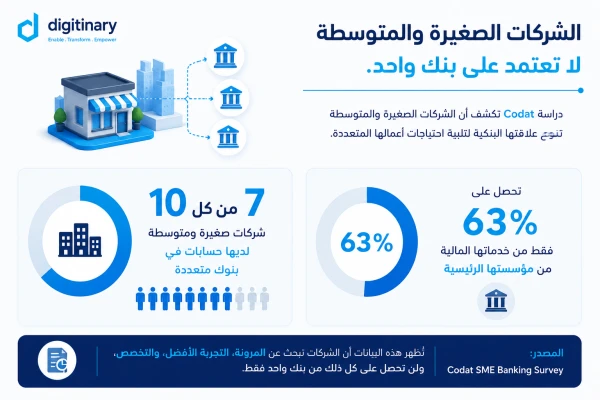
Sources: Accenture Banking Report 2024; Codat SME Banking Survey
This doesn't mean large financial institutions will disappear. Financial institutions and fintechs are in a complementary relationship, not a competitive one: fintechs depend on financial institutions as infrastructure. But who owns the customer interface, and who keeps the relationship, that's the real question.
What Fintech Has, and What It Doesn't
Fintech doesn't have what a large financial institution has: no full banking license, no insurance license, no infrastructure built over decades, no institutional-scale budget. That's a fact, not a hidden weakness. But it has something completely different: a complete user experience that solves one problem end to end, in the customer's context, with no friction.
Wise doesn't have a full commercial banking license, but it solved the problem of international transfers better than any traditional bank. Stripe doesn't have a major banking arm, but it solved the problem of accepting payments for developers with a simple API, inside their workflow. Klarna solved the problem of instant financing at the moment of purchase, without a separate loan application.
Fintech doesn't compete on the product, it competes on context and completeness. The customer doesn't want ten separate financial apps, they want one experience that understands their situation and solves their problem end-to-end.
The difference between the large financial institution and the fintech in this equation is that the institution has all the tools but doesn't deliver the service in the right context, while the fintech solves one problem in the right context but needs the infrastructure the institution already owns.
This is where the strategic shift lies.
The Strategic Shift: From Product-Maker to Platform
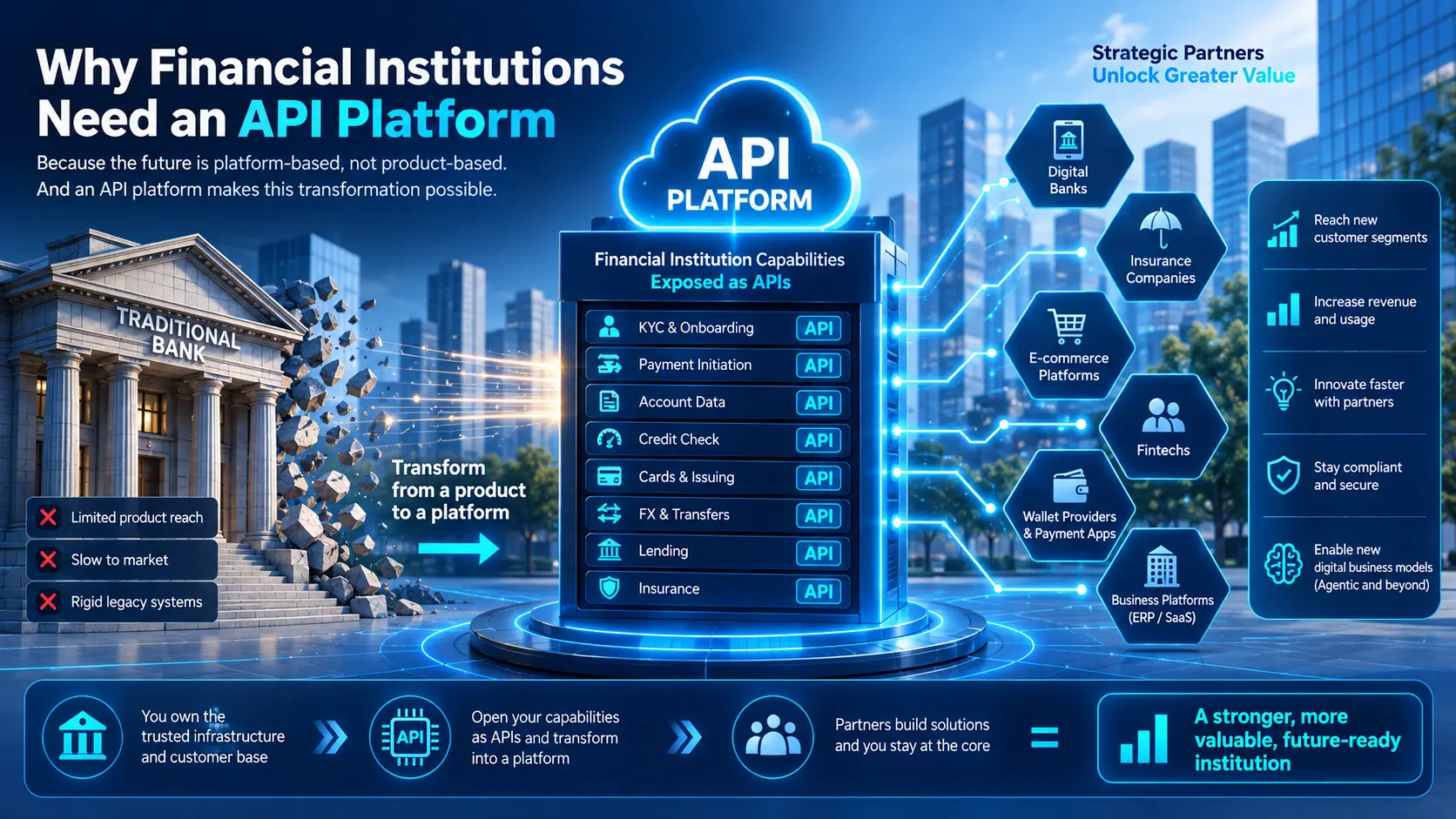
Instead of competing to build the best financial product directly for the customer, smart institutions are turning into a platform: opening up their core capabilities as APIs, and becoming the infrastructure everyone else builds on.
The difference between the two models is fundamental:
- The traditional model: the institution builds the product, markets it, and sells it directly to the customer. The institution is the end of the chain.
- The platform model: the institution opens its capabilities as APIs, and fintechs and companies build on top of it. The institution becomes the infrastructure.
This is what "the bank as an API platform," or "the financial institution as an API platform," means: instead of building everything yourself and trying to cover every need, you open your core services as organized APIs, a KYC API, a payment initiation API, a credit check API, an account data API, and let partners and developers build on top of them.
The result: the institution becomes financial infrastructure, not just a seller of financial products. And that's exactly what it needs to stay at the center of the financial system, even as the way customers are served keeps changing.
89% of financial institutions now see fintechs as strategic partners, not competitors. — McKinsey
The API as a Product: A New Revenue Source
Here comes the second dimension of this shift, and it's the more commercially important one: APIs aren't just a way to open services to partners, they're an economic product in their own right.
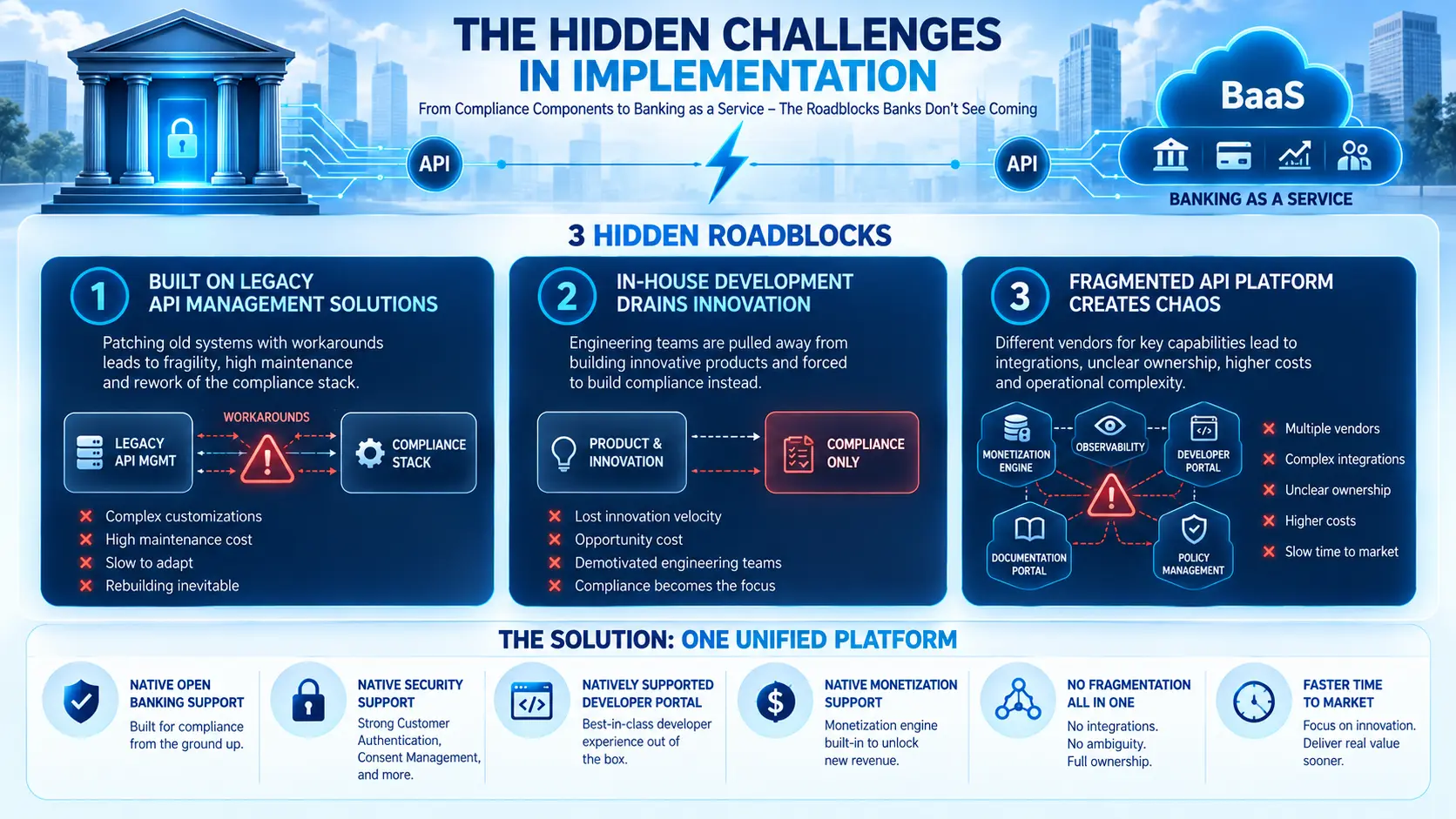
Most institutions build APIs as a "technical bridge": a way to integrate that works technically but doesn't generate direct commercial value. Turning an API into a product means something different: a clear value proposition, a defined audience, pricing, and a managed lifecycle.
API monetization models in financial institutions:
- Pay-per-use / API tiers — partners pay based on the number of API calls or the volume of data.
- Freemium + Premium — free access to basic APIs, with paid advanced features like instant payments or detailed KYC.
- Revenue share — sharing revenue with partners who build products on top of the APIs.
- BaaS in banking, or PaaS (Platform-as-a-Service) for other industries / Embedded Finance — letting non-financial companies embed financial services inside their own products.
Market-level numbers confirm this direction:
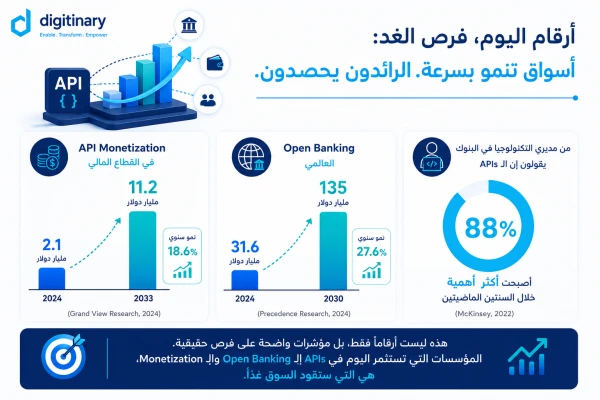
Sources: DataIntelo, Juniper Research, McKinsey Global Survey on APIs in Banking
And more importantly: the goal itself has shifted. In 2020, the primary goal of APIs was cutting operating costs. In 2024-2025, the primary goal became innovation and finding new revenue sources.
Source: McKinsey Tech Forward Survey, 2022
The Agentic AI Equation: Why This Shift Is Now Urgent
Everything above has been up for discussion for years. But the arrival of agentic AI in the equation changed the scale of the issue entirely.
AI agents are systems that operate independently to achieve specific goals: reviewing loan applications, managing investment portfolios, detecting money laundering, executing transactions on a user's behalf, and interacting with entire financial systems without moment-to-moment human intervention.
These agents don't open an app or tap a button on a visual interface. They talk to APIs directly.
The 2026 numbers reflect the scale of this shift:
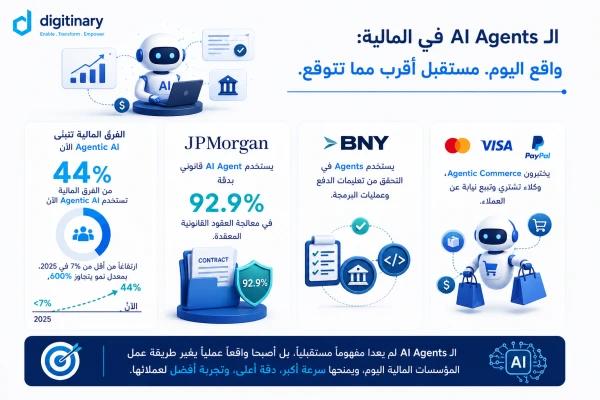
Sources: Deloitte Center for Financial Services (Aug 2025), Azilen, BAI Financial Services Report
The agentic AI market in financial services is heading toward $33 billion by 2030.
The strategic lesson here is clear: AI agents represent a new wave of digital "customers" that consume APIs at massive scale. The institution with a mature API platform will be the one these agents connect to. The institution without one will be excluded from this new system.
A Real-World Example: How a Large Bank Won Back Its Customers
One of Europe's largest banks was losing small and medium-sized business customers to fintech platforms specialized in international transfers and currency-risk management. The competitor wasn't another bank, it was a cheaper, faster digital platform.
The bank's decision wasn't to build a cheaper or faster product. Instead, it decided to build an API platform that integrates directly with customers' accounting systems.
The result: it launched an FX management and currency-risk-hedging service that automatically pulls invoice data from the accounting system, hedges risk automatically, and gives the customer a complete view of cash flow tied to their foreign-currency exposure.
The bank started winning customers back. Not because it was cheaper than the digital competitor, but because it solved the problem inside the customer's full business context, something no standalone fintech can offer, since it lacks the full banking license and the breadth of financial products.
Source: Harrington Starr, The API-Driven Bank, 2025 (Lloyds Bank / CoBa Case Study)
The Strategic Choice Facing Financial Institutions
Large financial institutions face a clear choice in the next stage.
Option one: stay with the traditional model
- Keep competing on direct financial products.
- Gradually lose the customer relationship to fintechs with better context.
- Get excluded from the emerging AI agent economy, because you don't offer consumable APIs.
- Turn into a "regulated deposit holder," just a warehouse for deposits and financing.
Option two: build an API platform
- Move from product provider to platform orchestrator.
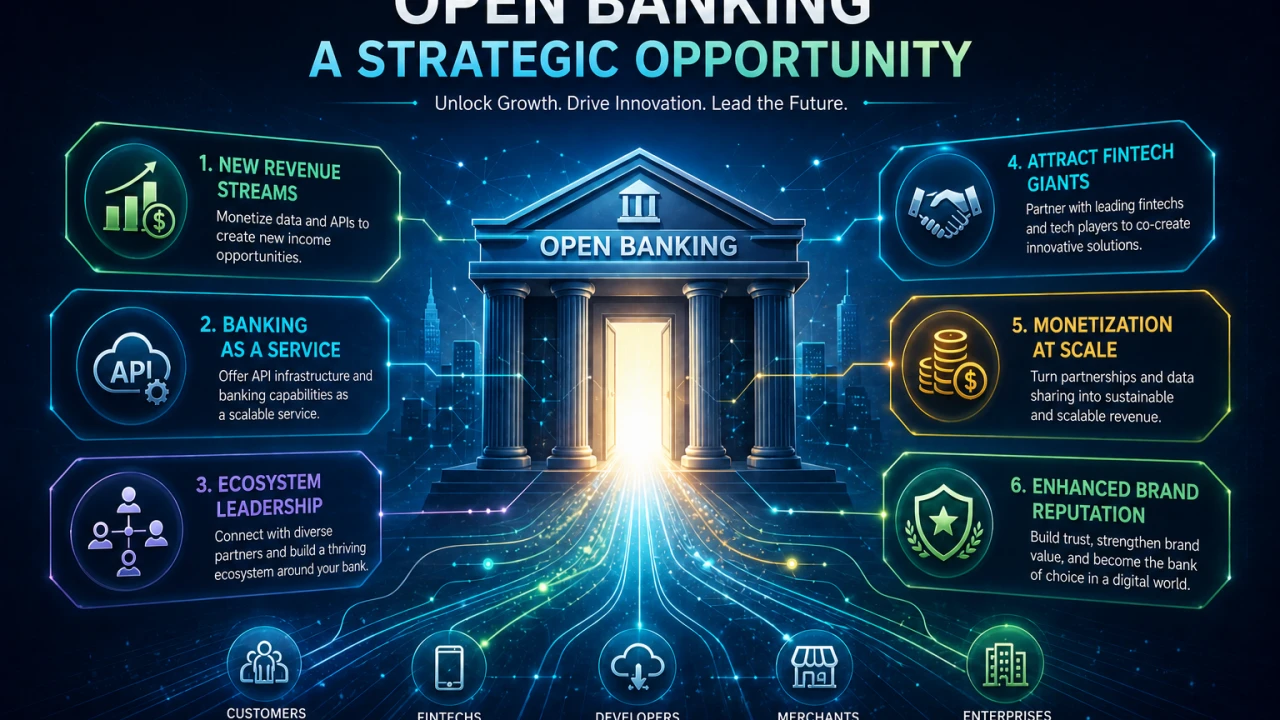
- Turn core capabilities into APIs, as sellable, priceable products.
- Build an ecosystem of partners instead of competing with everyone.
- Get ready to be consumed by AI agents, a new generation of "digital customers."
- New revenue that Oliver Wyman estimates at $50 to $75 million a year per institution.
Conclusion
The shift to an API platform isn't a technical decision that belongs to the IT team alone. It's a strategic decision that determines the institution's position in the financial system for at least the next decade.
Three forces are pushing toward this shift at the same time:
- Regulatory: Open Banking — regulators (central banks) are pushing to open up data and services through APIs.
- Commercial: API-as-Product — institutions that turned APIs into products are generating direct new revenue.
- Technical: Agentic AI — AI agents consume APIs directly, which makes the quality of your API platform a condition for existing, not just a competitive edge.
The question isn't "whether" financial institutions should become an API platform, the question is "when to start, and where."
The institution that hasn't built its API platform yet won't have a place on the map of the AI agent ecosystem in 2027.
References
- McKinsey, APIs in banking: From tech essential to business priority (2023)
- Deloitte, How banks can supercharge intelligent automation with agentic AI (Aug 2025)
- Harrington Starr, The API-Driven Bank (2025)
- SunTec, Monetizing APIs: A new revenue generation model for banks
- DataIntelo, Banking API Monetization Platform Market 2033
- Juniper Research, Open Banking APIs Market Report 2025-2029
- Azilen, Agentic AI in Financial Services 2026