Isn't fintech going to compete with banks, or replace them?
In many of our conversations with financial institutions across the region, we hear a version of this question. It's a fair question to ask. But it's also where the real problem starts. The institutions that base their entire Open Banking stance on this fear are the same ones that end up treating it as a threat to be contained, rather than an opportunity worth investing in.
Fintech Is Not a Competitor: It's a Layer Built on Top of the System
Let's be precise about this.
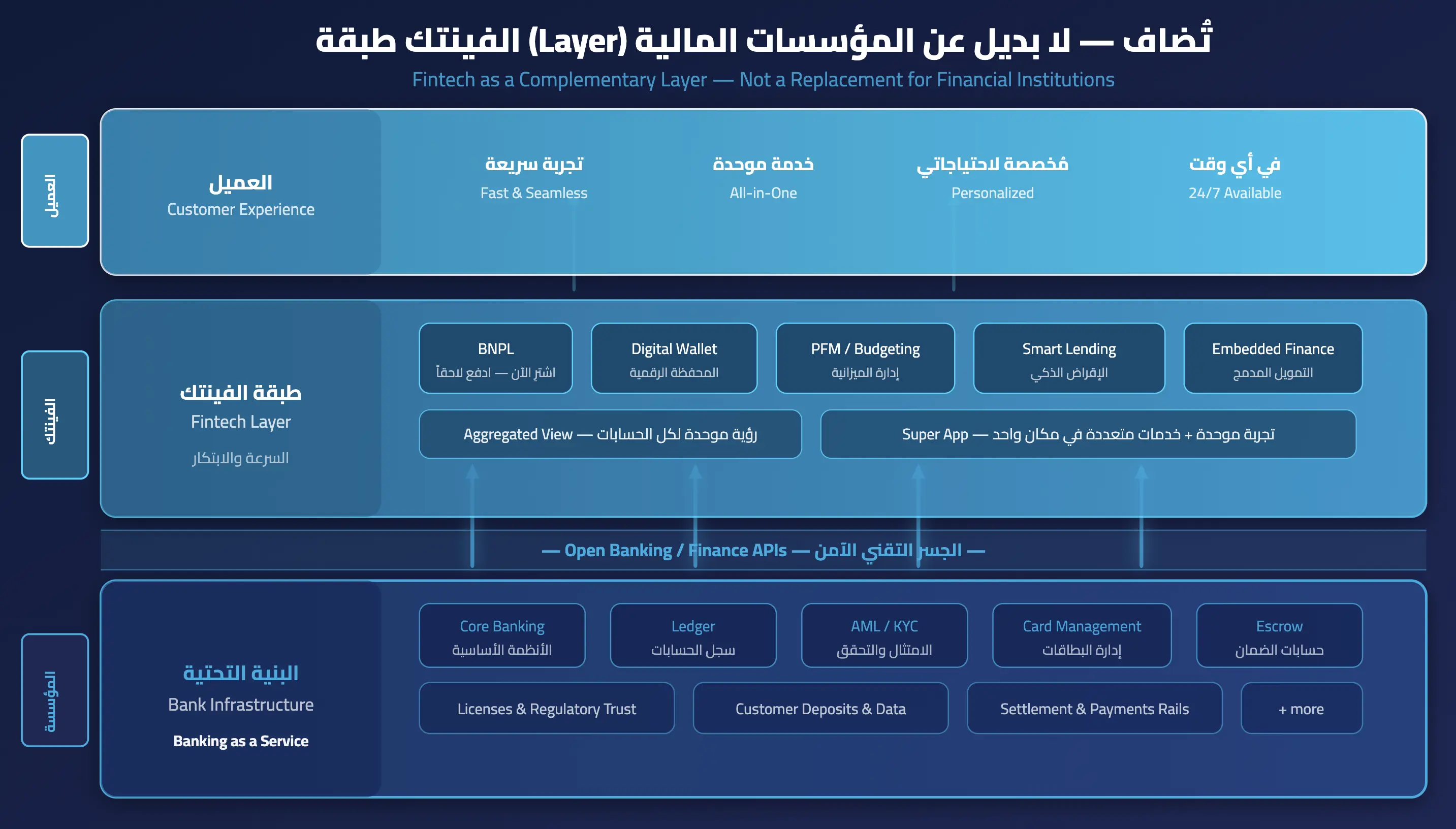
Fintech did not come to compete with banks or replace them. By nature, it is a layer built on top of the existing financial system. It adapts to customer needs faster, sits closer to people's daily lives, and reaches pain points quicker than traditional banking channels usually can. But all of that speed and proximity still rests on infrastructure that banks built in the first place.
- Anti-money-laundering screening: fintechs usually have to go back to a financial institution for it.
- Card management system: same answer.
- The ledger behind the accounts: also the bank.
- Escrow accounts: sitting with the bank too.
In other words, the bank is the foundation fintech builds its business on. The relationship between the two is inherently complementary, not competitive.
A Direction No One Can Stop
There's a second reality worth stating plainly.
The push toward building fintech ecosystems didn't come from companies alone, it came with direct encouragement from regulators and central banks across most of the region. It's a strategic, state-level decision. Central banks are actively building regulatory frameworks to support fintech, licensing new entrants, and requiring financial institutions to open up through APIs. Swimming against that current is no longer a realistic option.
Over time, more of the customer relationship will gradually move into the fintech layer. That doesn't mean banks' own digital channels disappear, it means a growing share of the customer's daily financial experience will happen inside fintech apps. Fintech offers something most banks still struggle to deliver at the same speed: an aggregated view of a customer's entire financial life, all accounts in one place. That's not a nice-to-have. It's fintech's single biggest competitive advantage.
What a Bank Loses When It Treats Open Banking as Just Compliance
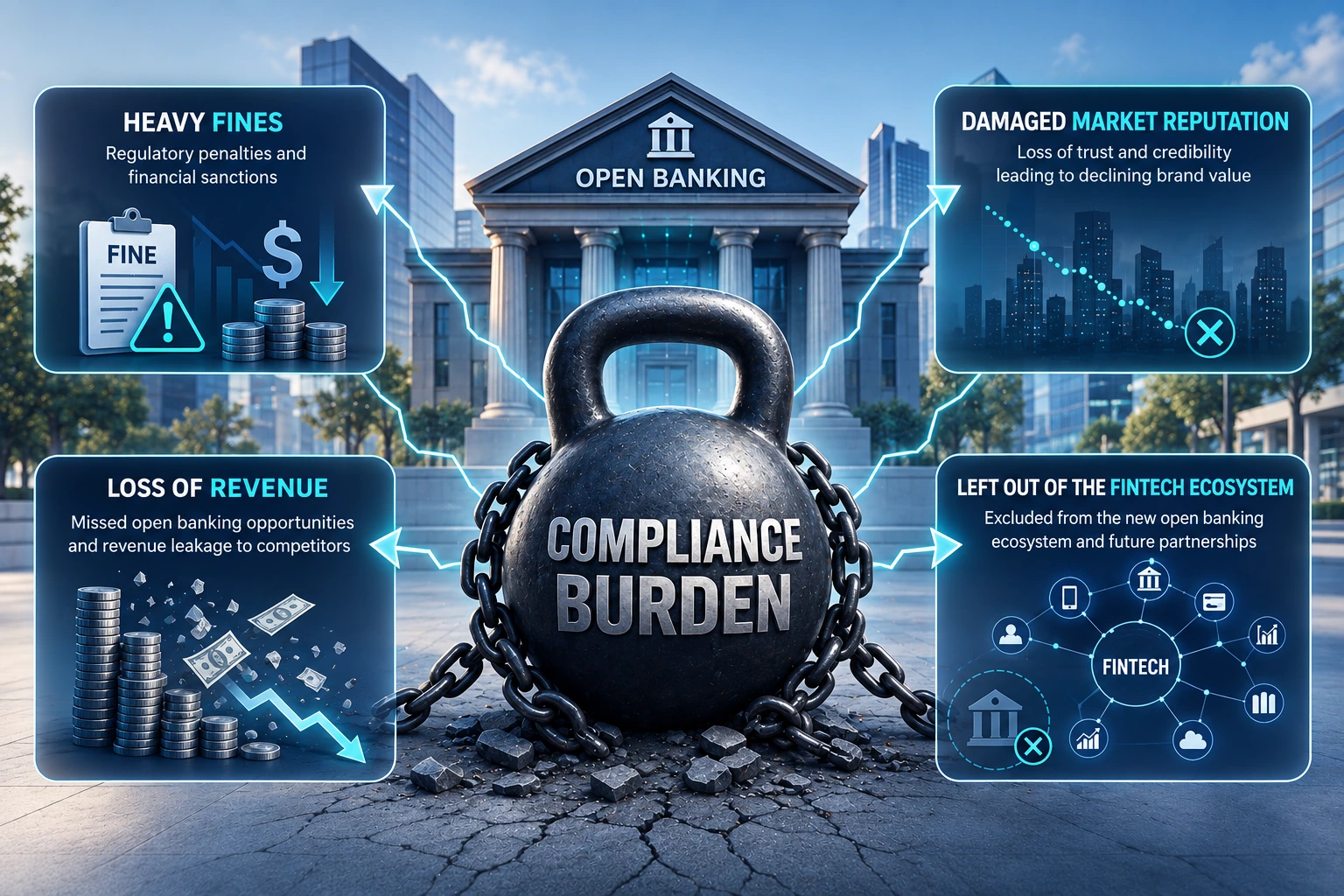
Through our work with financial institutions across the region, we keep seeing the same pattern: an institution that treats Open Banking purely as a compliance checklist accumulates a cost quietly, until it grows too large to ignore.
1. Regulatory Consequences Compound Like Debt
In many markets across the region, Open Banking compliance has stopped being optional, it's now effectively a license to operate. An institution that falls behind on full compliance faces direct consequences: documented financial penalties; restrictions on launching new products, since some central banks require full compliance before approving expansion; and mounting pressure, because every day of delay makes the eventual transformation project more complex and more expensive. Regulatory debt behaves exactly like technical debt, it accrues interest.
2. A Quiet Decline in Market Position
Picture this from a customer's point of view. They open a new fintech app, a buy-now-pay-later service, or a unified account management tool. The app asks them to link their bank account. They open the list of supported banks... and their own bank isn't there. In that moment, the implicit message is clear: this bank doesn't exist in the new ecosystem. And that message compounds. Service after service, the customer starts seriously asking themselves: should I switch banks?
Institutions that built API platforms show up inside these apps as a "supported" option. Institutions that didn't are simply absent, and in a digital ecosystem, absence isn't neutral. It's a quiet withdrawal from competition. Research suggests around 70% of users now prefer platforms that bundle financial services together without forcing them to jump between apps, which is exactly what the fintech layer provides.
3. Revenue That Hasn't Been Born Yet
This is the largest cost, and the least visible one. Every new wave of financial services, embedded finance, banking-as-a-service, data-driven lending, depends on a solid API infrastructure. An institution without a real API platform simply cannot enter these markets.
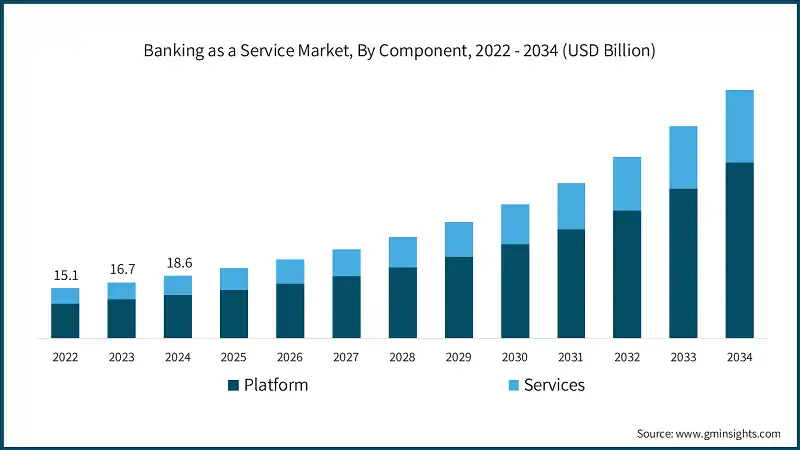
The problem is that this revenue doesn't show up in current budgets, because it doesn't exist yet. But it will be very real in the budget of whoever moves early. The embedded finance market alone was worth $18.6 billion in 2024 and is projected to exceed $73.7 billion by 2034. The banking-as-a-service market is growing at more than 15% annually, and all of it runs on API infrastructure that banks already own. An institution that waits will lose this market share before it ever appears on a balance sheet.
4. Falling Out of the Ecosystem Equation
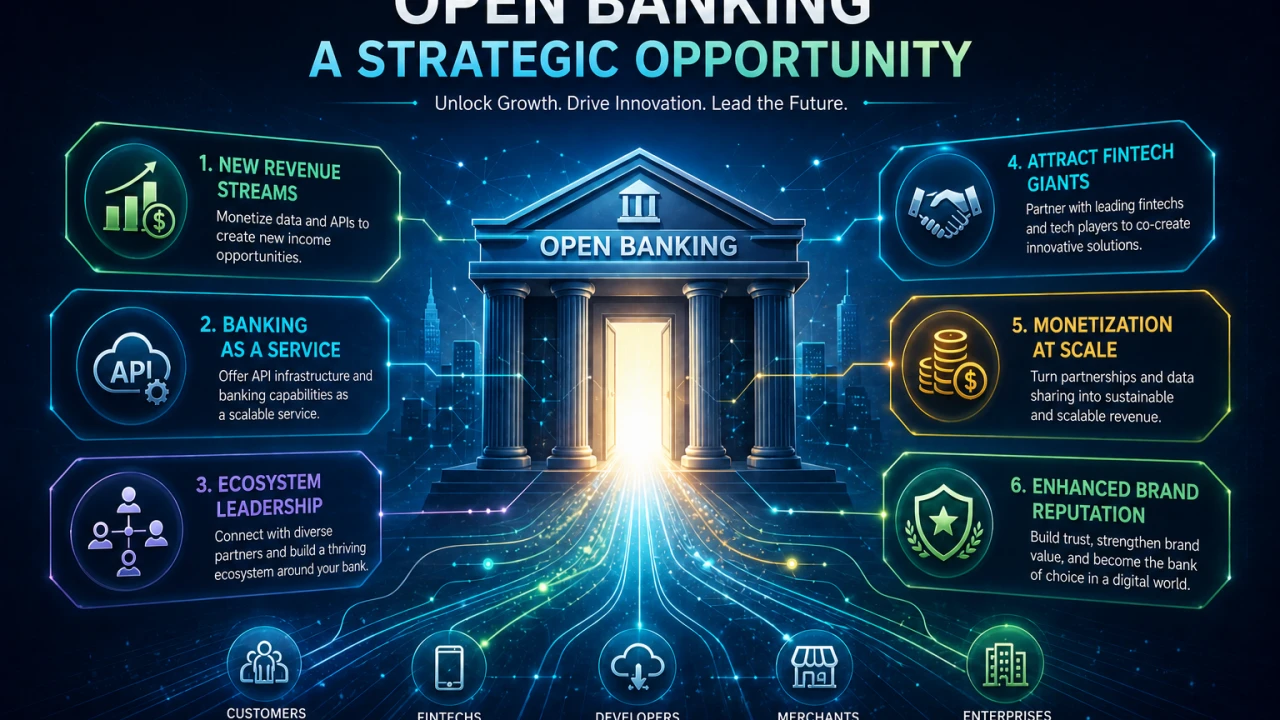
As the fintech ecosystem expands across the region, demand for core banking services will grow too, just in a different shape. Fintechs will need partners who can provide AML services, card systems, ledgers, escrow accounts, and identity verification. Institutions that have built API platforms will become the natural supplier for these services, offering them as banking-as-a-service and turning their own infrastructure into an independent revenue source.
Institutions that haven't built this capability will simply be bypassed. Fintech will go to whoever is ready. It won't wait.
The Cumulative Effect: It Never Arrives All at Once
What sets this kind of loss apart is that it never arrives as one dramatic event. It builds up quietly: a customer moves their account to a competing institution; a fintech chooses a different banking partner; a product launch stalls because compliance requirements weren't finished in time; a strategic partnership is missed because the API wasn't ready.
Each event looks small on its own. Together, they redraw an institution's position in the market.
Conclusion: It's Not the Bank That Disappears: It's Its Position
The point isn't that banks are going to disappear. Fintech needs banks, and will keep needing them. The real question is: who becomes a core pillar of this ecosystem, and who stays at the back, trying to catch up?
Institutions that invest early in building real API platforms, not just for compliance, will become the partner of choice for fintechs, and will open up revenue models that didn't exist ten years ago. Institutions that wait will end up building the same infrastructure later, at a higher cost and with a smaller share of the market.
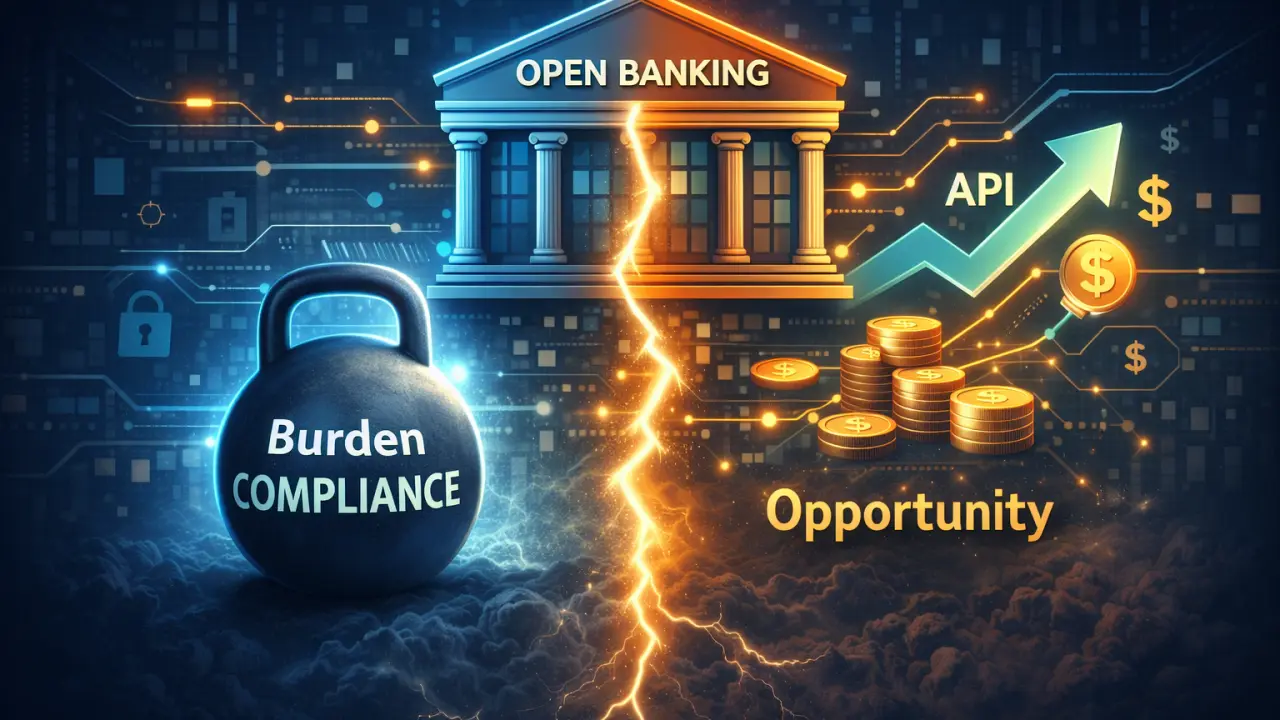
Open Banking isn't a regulatory box to tick and forget. It's a strategic decision that determines your position in a financial ecosystem that is being redrawn right now.
In our next article, we'll flip the perspective: what does a financial institution actually gain when it treats Open Banking as a genuine growth platform? We'll look at concrete revenue models, and how banking infrastructure itself becomes a product.
References
- Grand View Research, Middle East & Africa Open Banking Market Report (2024–2030)
- McKinsey & Company, Fintech in MENAP: A Solid Foundation for Growth
- GM Insights, Banking as a Service Market Size Report (2025–2034)
- ISHIR, Super-Apps and Embedded Finance: The Battle for Customer Wallets (2025)
- Fenergo, Global Financial Regulatory Penalties Report 2025
- Arab Monetary Fund, Guidelines for Effective Open Banking/Finance Adoption (2023)
- BCG, Fintech's Next Chapter: Scaled Winners and Emerging Disruptors (2025)