In just the past few weeks, our team sat in more than three meetings with very different organizations: banks, financial institutions, and telecom companies.
The request was surprisingly similar: "We want to build an Innovation Hub."
Some called it a Fintech Hub, others an Innovation Hub. But as soon as we got into the details, one thing became clear: each organization had a different idea of what an Innovation Hub actually is.
- One saw it as a hackathon and competitions program.
- Another saw it as a
developer portalwith a set ofAPIs. - A third wanted a place to receive fintech proposals and evaluate them.
Sometimes, in the same meeting, the requirements even conflicted. One team wanted to open the doors to fintechs, while another wanted to lock everything behind due diligence.
But once you remove the names and look at the real need, most of them want the same thing:
- A platform that empowers fintechs and gives them more than what they came for.
- A platform where the organization can evaluate the products fintechs offer.
- A platform that serves every fintech, not just one or two companies.
That is why we wrote this article: to define the Innovation Hub clearly, explain what it is built on, and show what it needs beyond the developer portal.
Where did the term come from?
Let's start from the beginning.
The term Innovation Hub did not start with enterprises. It started with regulators (central banks) and supervisory authorities.
The World Bank defines an Innovation Hub as a unit or platform set up by a regulator to engage with the market, give non-binding guidance, open a direct channel, and help new players understand licensing and compliance requirements [1].
A study by Ross Buckley, Douglas Arner, and colleagues points out that many of the benefits credited to the regulatory sandbox actually come from the Innovation Hub, and that the lack of consistent terminology has itself caused a lot of confusion [2].
This is exactly what we saw in those meetings: the same confusion, just moved from the regulator level to the enterprise level.
So let's separate the two types:
| Type | Who builds it | Its goal |
|---|---|---|
| Regulatory Innovation Hub | The regulator | Guide and organize the market |
| Enterprise Innovation Hub (or Partner Innovation Hub) | The enterprise | Build real partnerships with fintechs and startups, and turn them into products and revenue |
This article is about the second type.
What is an Innovation Hub, really?
Here is the definition in one sentence:
Definition
An Innovation Hub is a digital and operational platform where an enterprise exposes its capabilities to fintechs, and where fintechs can discover, build, test, and get evaluated, all the way to production and market together with the enterprise.
Three points in this definition matter:
- A platform, not an event. A hackathon can be part of it, but it is not the Hub.
- Two-way. The enterprise exposes
APIsand services to fintechs, and fintechs offer solutions the enterprise needs. - A full journey, from first sign-up to first revenue.
Why is this so urgent now?
Fintech in our region is no longer on the sidelines.
According to Wamda's annual report, startups in the region raised around $7.5 billion in 2025, of which $4.4 billion went to fintech, roughly 58% of all funding [3].
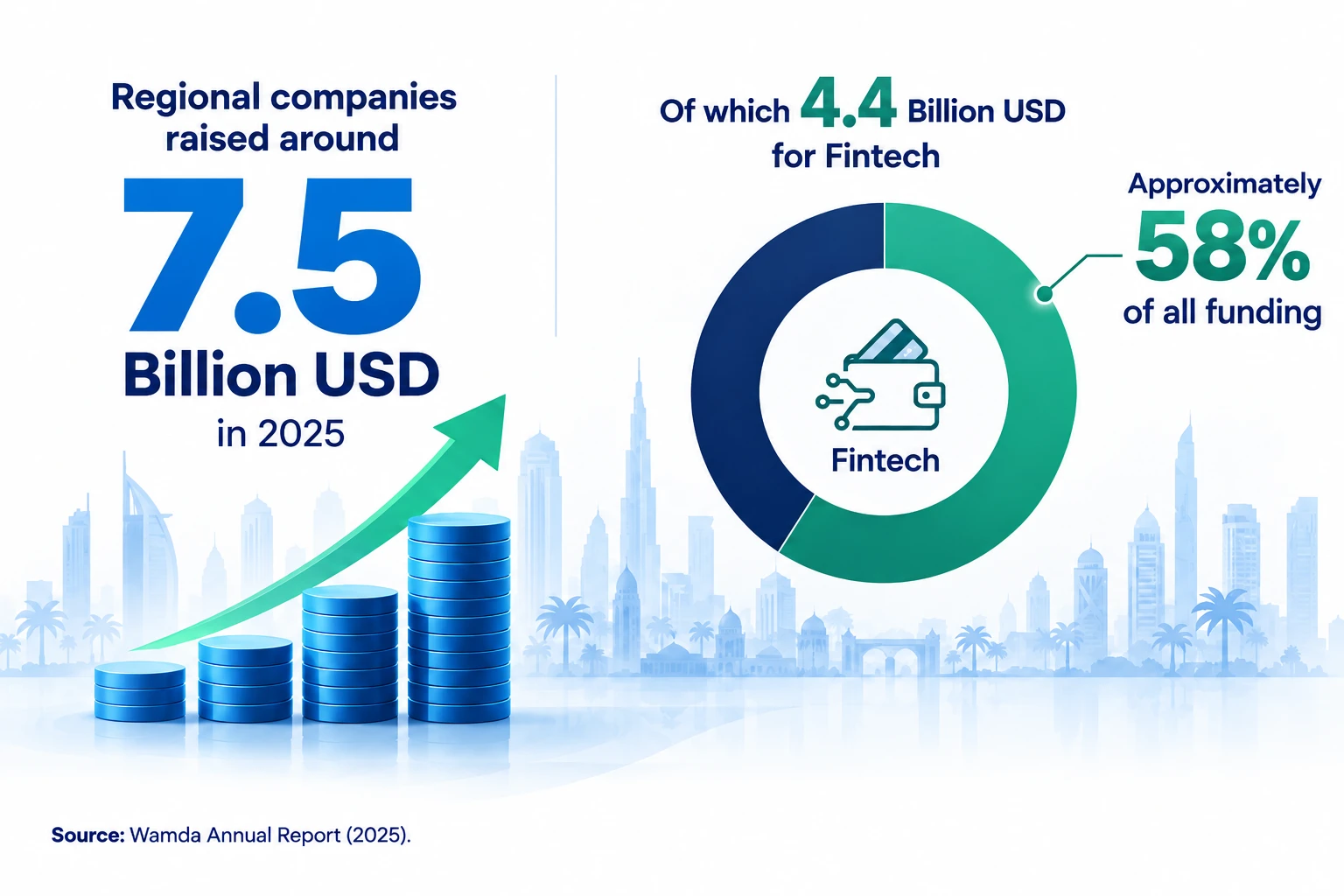
That means a large number of companies want to work with enterprises and build on top of their infrastructure.
On the other side, the partnership itself is not easy. A study by Bain & Company with the Euro Banking Association reports that around two-thirds of bank-fintech partnerships fall short of expectations. The reason is usually not technical. It is the lack of a clear business need, decision-makers getting involved too late, and applying the same full vendor assessment to a small fintech [4].
The International Chamber of Commerce (ICC) also documented that the lack of clear vendor-management standards stretches the time it takes to start a pilot or reach production, and that small fintechs often cannot complete a different due-diligence process for every enterprise [5].
The problem is not a shortage of fintechs, and it is not a lack of interest from enterprises. The problem is the road between them. And the Innovation Hub, if built right, is that road.
The foundation: APIs
Before we talk about any component, we need to be clear: the Innovation Hub is built on APIs.
Without a real API Platform, the Hub becomes a showroom. Nice pictures and presentations, but nothing fintechs can actually build on.
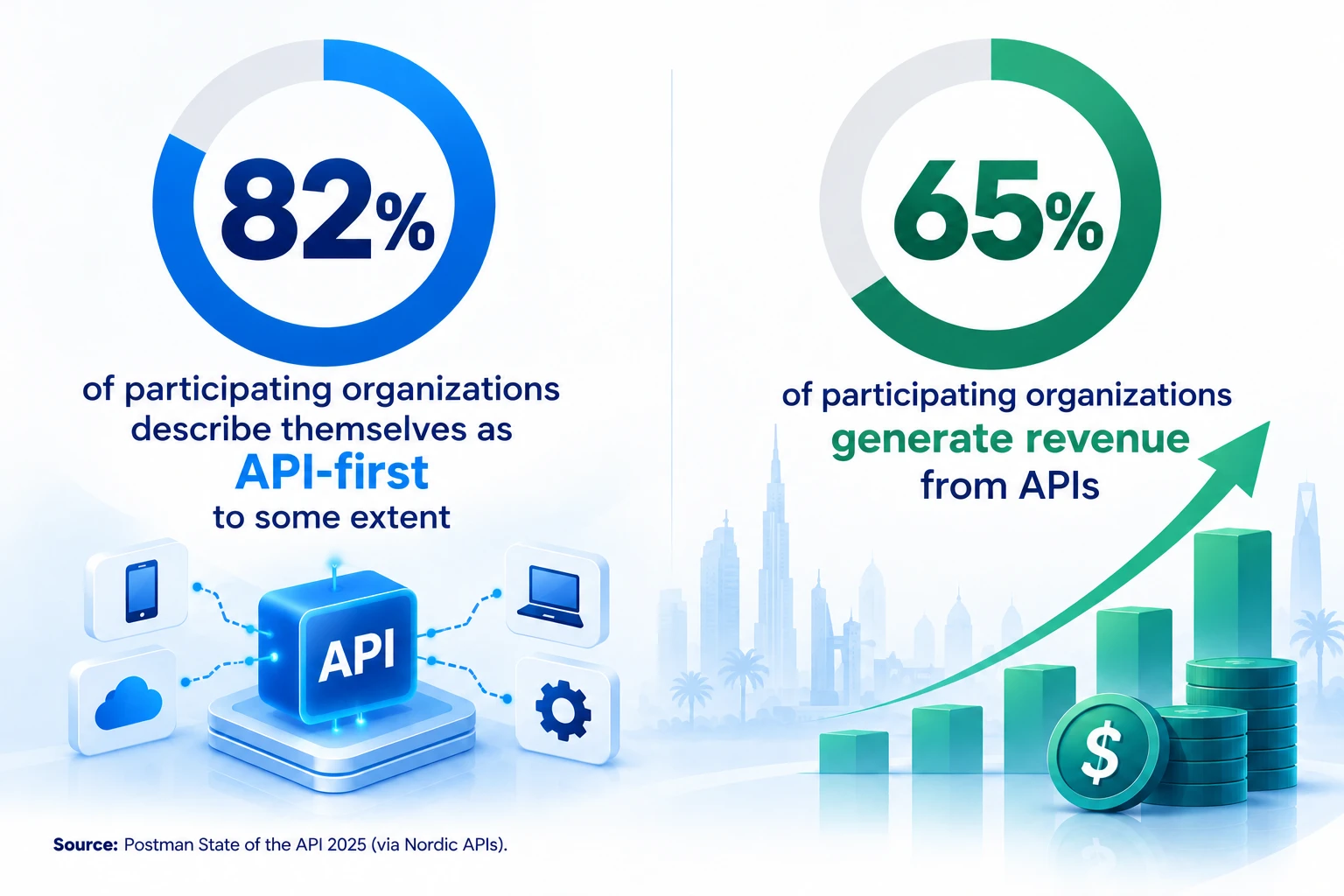
And this is not just an opinion. Postman's State of the API 2025 report shows that 82% of participating organizations describe themselves as API-first to some degree, and 65% generate revenue from their APIs [6].
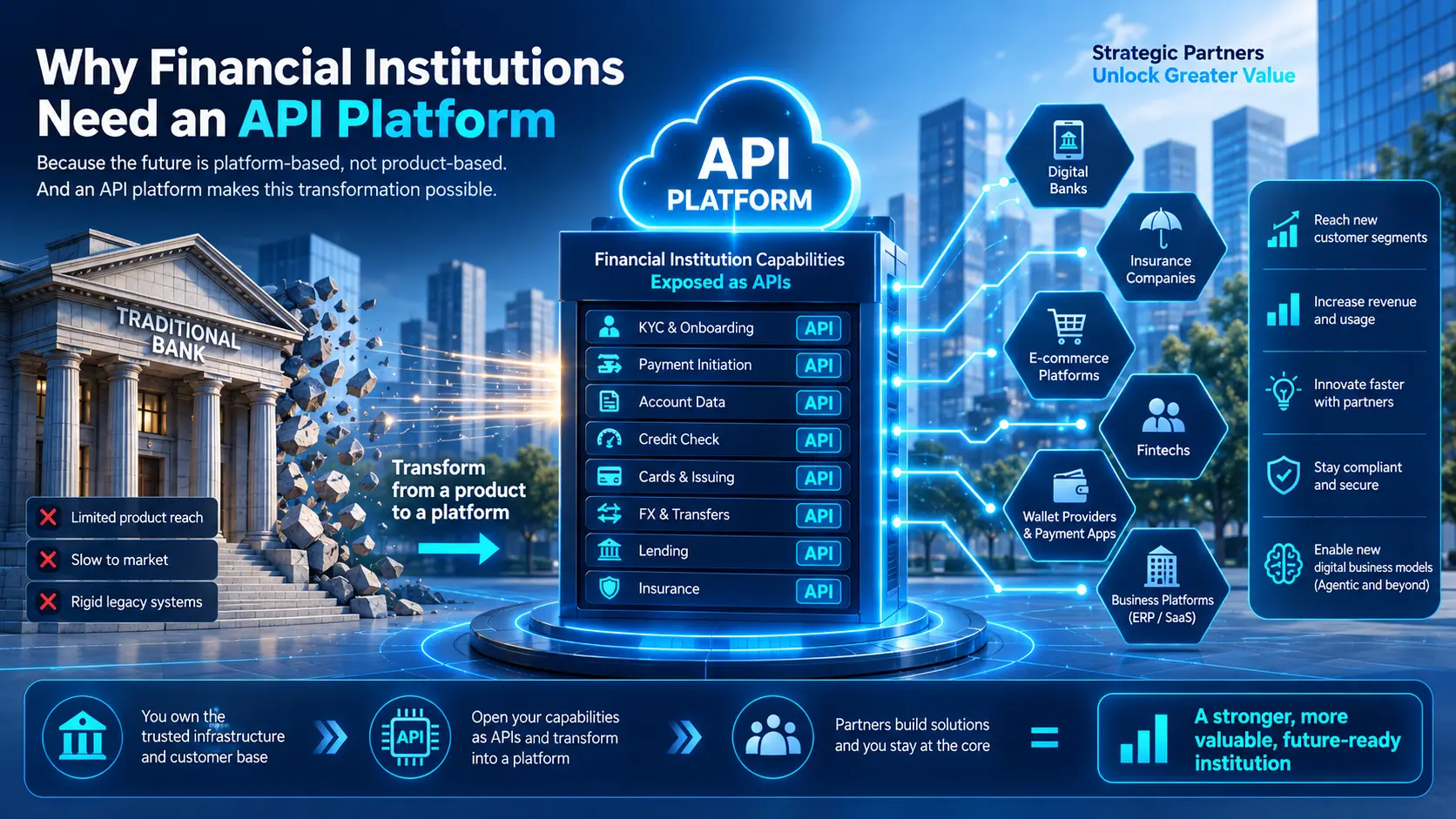
We have written before that an API is a product (API-as-a-Product), and that the API Platform is what makes an enterprise integration-ready (Large Financial Institutions as an API Platform). The Innovation Hub is the layer on top of that foundation: the layer that turns those products into partnerships.
The developer portal: the door, not the house
Most organizations that start building a Hub start with the developer portal, and that is the right move. A good developer portal needs:
- A clear API catalog, organized by product and use case.
- Documentation that is clear, accurate, and always up to date.
- Self-onboarding, plus management of apps and keys.
- A short, clear path to the first API call.
Let's pause on documentation for a moment.
Important
Inaccurate documentation is more dangerous than no documentation at all. It lets fintechs build on something that is not true, and they only find out late.
The same Postman report shows that more than half of participants named inconsistent documentation as one of the biggest collaboration problems [6].
The reason is usually simple: in most enterprises, updating documentation is a manual process. One team changes the API, and someone else has to remember to update the portal.
In Wasl, we chose to solve this problem at the root [7]. The whole process is automated and linked directly to the APIs that are actually exposed. Any change to an API, or to its status, is reflected on the developer portal immediately, with no manual entries.
In other words: what fintechs see on the portal is exactly what is running. We explained why this matters in No Developer Portal? The Real Cost Isn't Visibility, It's Time.
But the developer portal answers only one question: "How do I integrate with you?"
The Innovation Hub has to answer bigger questions:
- What problems does the enterprise need solutions for?
- How will the enterprise evaluate my solution?
- How do we move from
PoCto production? - And how do we both make money?
The developer portal is the door. The Innovation Hub is the whole house.
What do we add after the developer portal?
From our meetings and our research, we group the components into three layers.
1. Build & Experiment
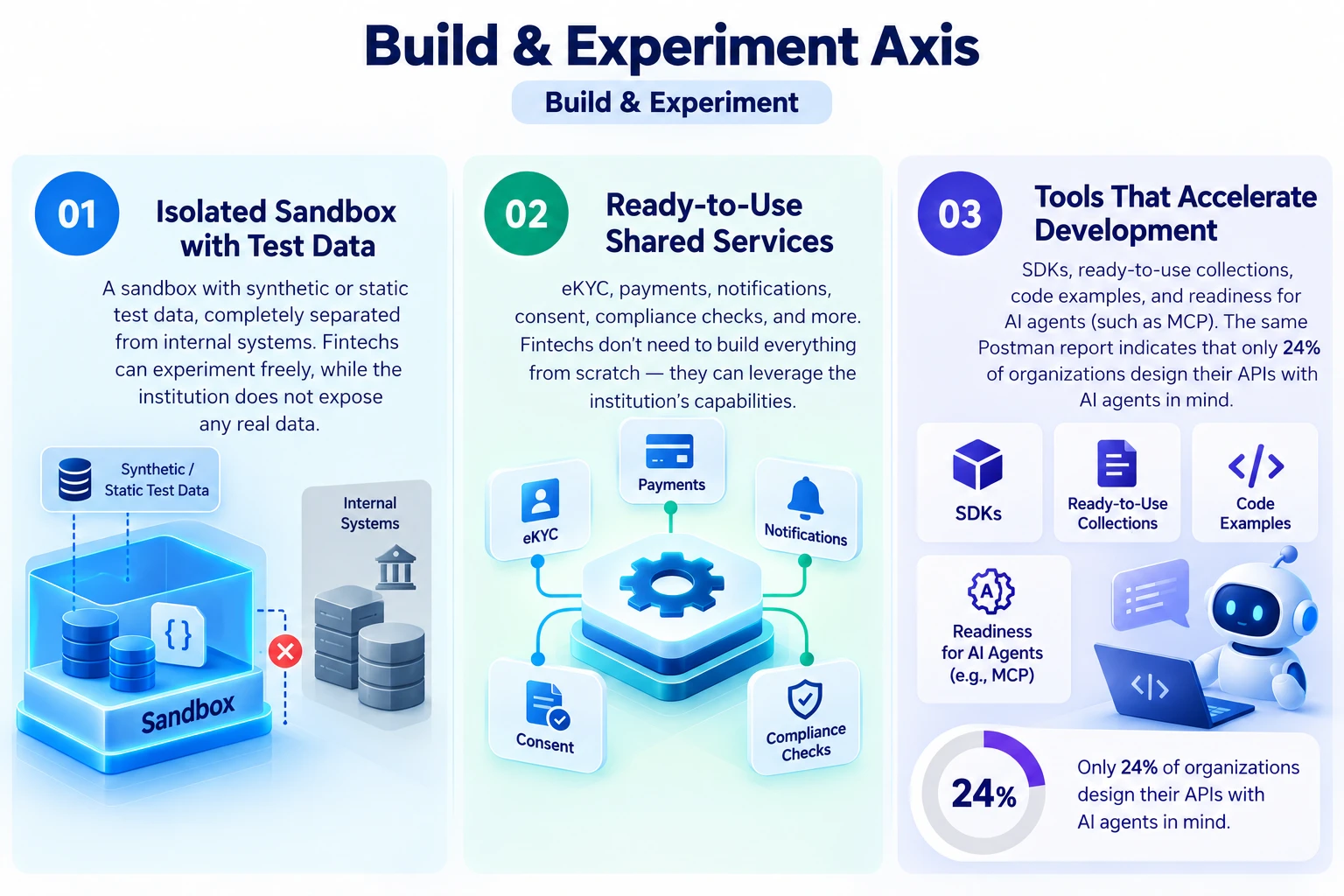
- An isolated sandbox with test data (
syntheticorstatic), fully separated from internal systems. Fintechs experiment freely, and the enterprise exposes no real data. - Ready-made shared services:
eKYC, payments, notifications,consent, and even compliance checks. Fintechs do not need to build everything from scratch; they plug into the enterprise's capabilities. This is exactly where the extra offerings come in that make the Hub worth joining. - Tools that speed up building:
SDKs, ready collections, code samples, and readiness for AI agents (such asMCP). The same Postman report shows that only 24% of organizations design their APIs with agents in mind [6].
2. Discover & Evaluate
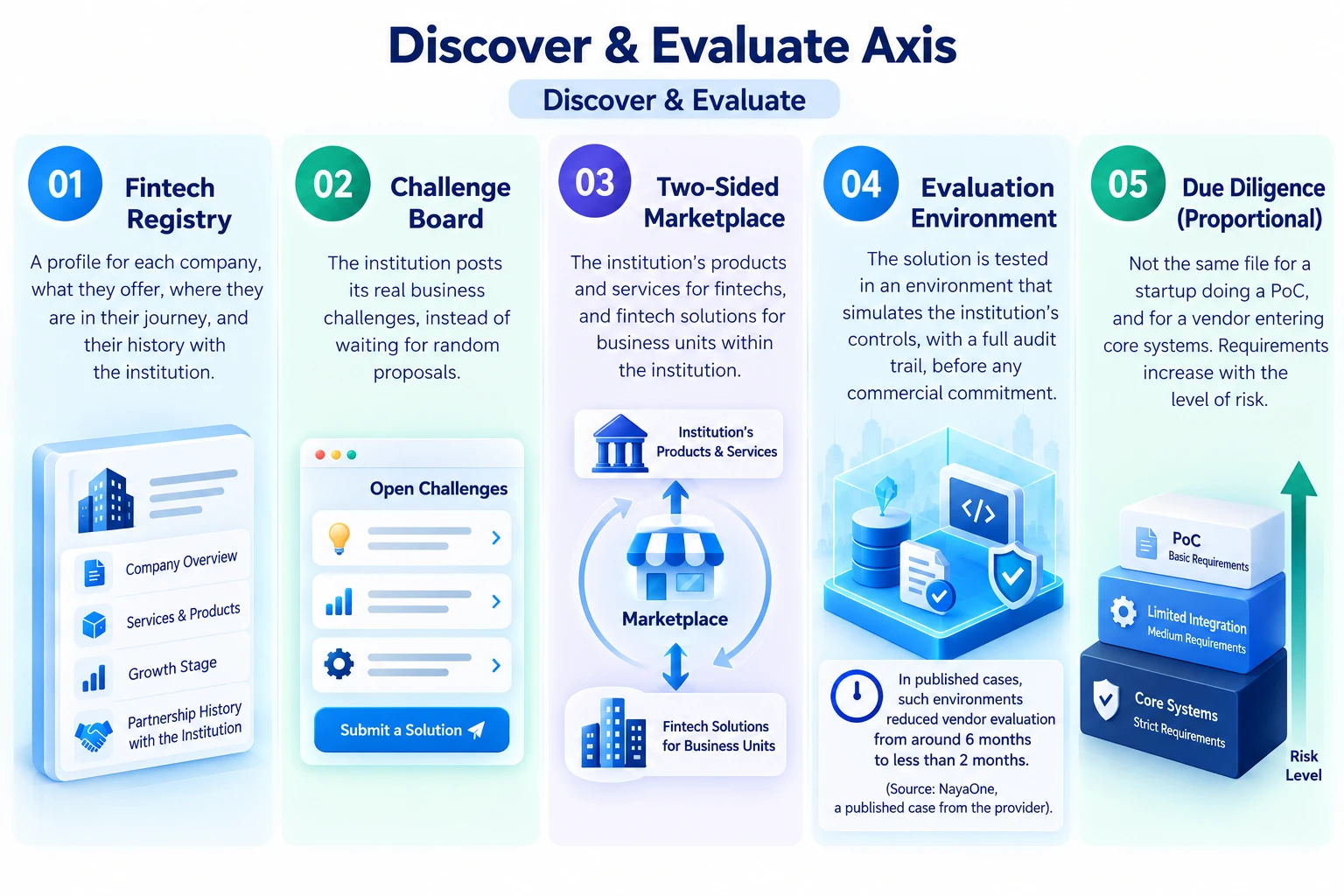
- Fintech Registry: a profile for each company: what it offers, how far it has come, and its history with the enterprise.
- Challenge Board: the enterprise publishes its real problems instead of waiting for random proposals. This tackles the first reason partnerships fail according to Bain: the lack of a clear business need [4].
- A two-way Marketplace: the enterprise's products and services for fintechs, and fintech solutions for business units inside the enterprise.
- Evaluation Environment: the solution is tested inside an environment that mirrors the enterprise's controls, with a full
audit trail, before any commercial commitment. In published cases, environments like this cut vendor evaluation from around six months to less than two months (source: NayaOne, a published case from the vendor itself). - Proportional due diligence: a startup running a PoC should not face the same file as a vendor connecting to
coresystems. Requirements grow with the level of risk.
3. Grow & Partner
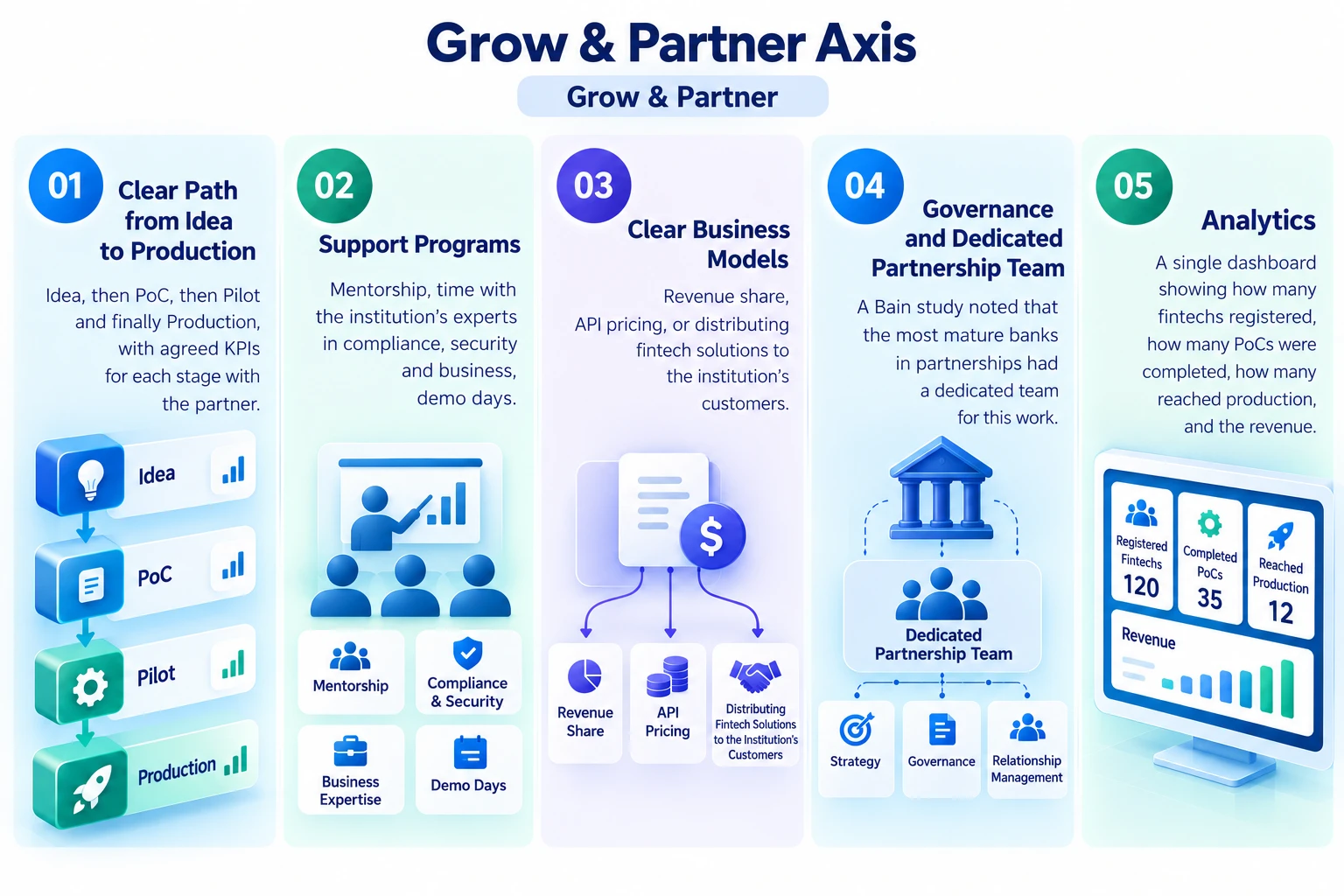
- A clear path from idea to production: Idea → PoC → Pilot → Production, with KPIs for each stage agreed upfront with the partner.
- Support programs: mentorship, time with the enterprise's experts in compliance, security, and business, and demo days.
- Clear commercial models: revenue share, API pricing, or distributing fintech solutions to the enterprise's customers.
- Governance and a dedicated Partnership Team. Bain's study observed that the banks most mature in partnerships had a team dedicated to this work [4].
- Analytics: one dashboard showing how many fintechs signed up, how many PoCs ran, how many reached production, and the revenue generated.
Notice that the first layer is technical, but the second and third layers are operational and commercial. That is the difference between a portal and a Hub.
Mistakes we have seen on the ground
From the discussions we have been part of, some patterns keep repeating:
| Mistake | What it looks like |
|---|---|
| A Hub without real APIs | A beautiful front end, but nothing to integrate with. |
| A Hub as a yearly event | A hackathon, prizes, and photos... and then no follow-up. |
| A one-way Hub | The enterprise shows what it offers, but there is no way to receive and evaluate fintech solutions. |
| A Hub locked from step one | Everything behind an NDA and due diligence, even the sandbox. |
| A Hub without an owner | No responsible team and no KPIs, so it quietly dies. |
Where do you start?
You do not have to build everything at once.
| Phase | What to build |
|---|---|
| Phase 1 | Developer portal, sandbox, and a small set of high-value APIs. |
| Phase 2 | Challenge Board, evaluation environment, and a clear PoC path. |
| Phase 3 | Marketplace, commercial models, and support programs. |
Start small, with clear products, and grow over time.
Key takeaways
- "Innovation Hub" means different things to different teams. Agree on a clear definition before you build.
- An enterprise Innovation Hub is a two-way platform covering the full journey from sign-up to revenue, not an event and not a web page.
- It is built on a real API Platform; without it, the Hub is just a showroom.
- The developer portal is the door. The Hub adds Build & Experiment, Discover & Evaluate, and Grow & Partner layers.
- Most bank-fintech partnerships fail for business and process reasons, not technical ones. The Hub has to fix the road between both sides.
Conclusion
The Innovation Hub is not a project name, not a page on the website, and not a hackathon once a year.
It is where APIs become partnerships, partnerships become products, and products become revenue. At Digitinary, this is exactly what we are working on through the Wasl platform [7].
An enterprise that builds its Hub the right way does not just welcome fintechs... it becomes the platform fintechs build on.
References
- World Bank, "Sandboxes and Innovation Hubs": digitalfinance.worldbank.org
- Buckley, Arner, Veidt & Zetzsche, "Building FinTech Ecosystems: Regulatory Sandboxes, Innovation Hubs and Beyond", Washington University Journal of Law & Policy, Vol. 61 (2020): openscholarship.wustl.edu
- Wamda, "Record year: MENA startups funding climbs to $7.5 billion in 2025", January 2026: wamda.com
- Bain & Company and Euro Banking Association, "United We Thrive: The Untapped Power of Bank-Fintech Partnerships", December 2023: bain.com
- ICC, "Fintech Collaboration Guidelines", 2022: iccwbo.org
- Nordic APIs, "A Deep Dive Into the State of the API 2025" (Postman): nordicapis.com
- Digitinary, Wasl platform: digitinary.com/wasl